A CONCERT FOR VALENTINE’S DAY
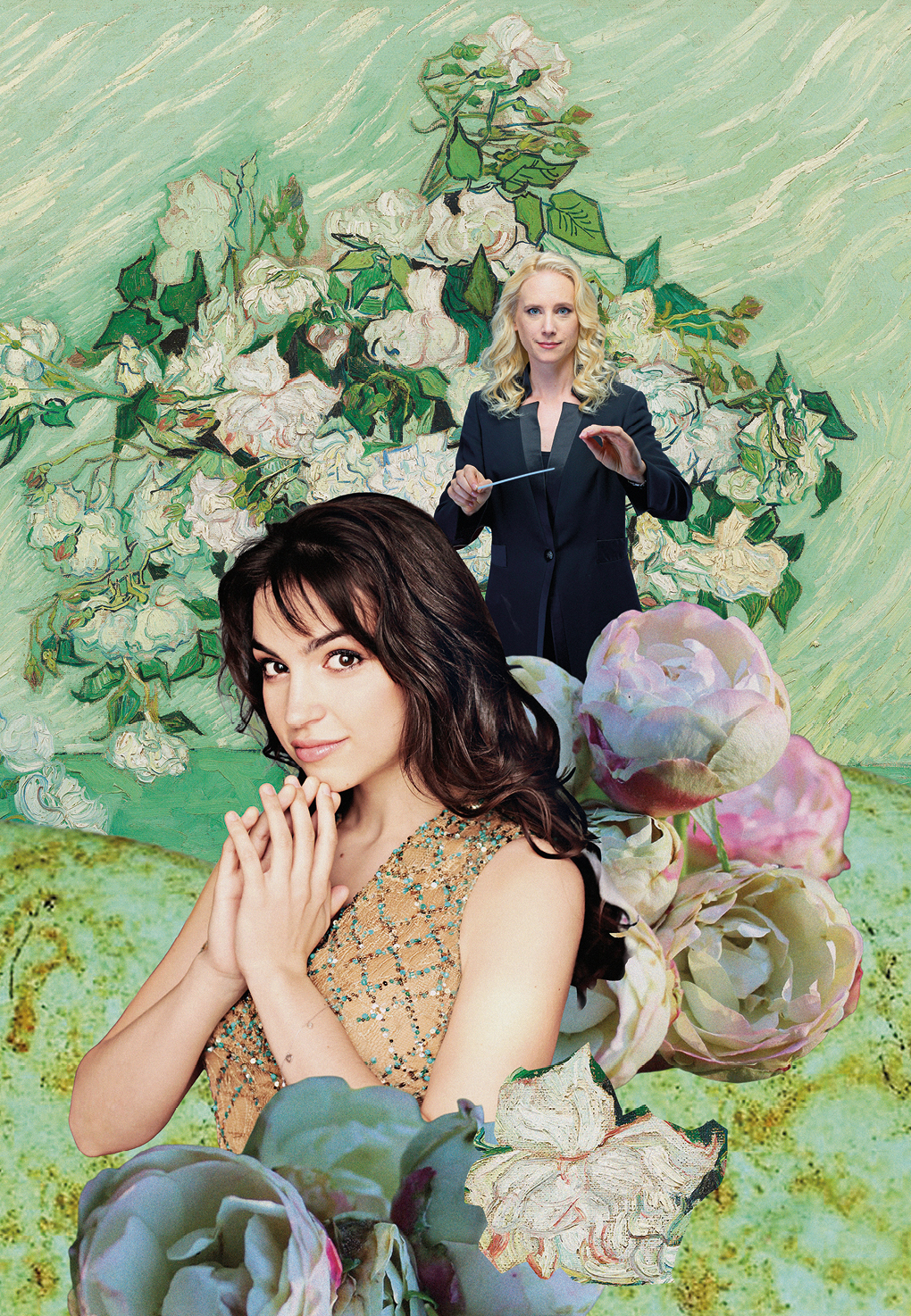
Olga Scheps, piano
Swiss Orchestra
Lena-Lisa Wüstendörfer, conductor
What could be lovelier on the day of love than celebrating the idea that great music can spring from great love? A love sometimes romantic, at others platonic, or even tragic. In our Valentine’s Day Concert, the pianist Olga Scheps and the Swiss Orchestra will reveal the inspirational power of love through works by Schumann and Brahms.
—ROBERT SCHUMANN
Piano Concerto in a minor, op. 54
JOHANNES BRAHMS
Symphony No. 1 in c minor, op. 68
“Dear Madam”, “Most revered Madam”, “My darling friend”, “My most beloved friend”. These different forms of address, which all come from the pen of Johannes Brahms in his letters to Clara Schumann, serve as a kind of barometer of his emotions and testify to their growing intensity and intimacy. The young Brahms long retained the polite, “Sie” form of address in his letters, but in 1854, when Clara suddenly used the familiar “Du” form instead, he replied ecstatically: “How lovingly the familiar ‘Du’ looks out at me! A thousand thanks for it. I can’t look at it and read it enough […]; rarely have I missed the word so much as when I read your last letter”. His delight in this intimate form of address in 1854 did not lead him to respond in kind until 1856, but by which time he wrote: In 1856 he wrote: “My beloved Clara, I wish I could write to you [‘Dir’, using the intimate form] as tenderly as I love you. […] Your letters are like kisses to me”. There has been ample speculation about the nature of their relationship. What’s clear is that Johannes was infatuated with Clara, that a lifelong friendship was the result of this, that he supported her and her children to the end of his life, and that he sought her advice in musical matters. But Clara was also, of course, the loving wife of Robert Schumann.
Robert and Clara had had to fight through the courts to be able to marry. After they were successful, they kept a joint diary and enjoyed happy years together in which they constantly reaffirmed their fidelity and love for each other. In 1845, Robert completed his Romantic piano concerto, and the soloist at its world premiere was of course his wife Clara, who had been the inspiration behind it and advanced to being its most significant interpreter. And Robert had already inscribed her name into the work at the outset: After a forceful tutti chord in the orchestra and a cascading progression of chords on the piano, there follows a dreamy, lyrical first subject that we hear initially on the oboe and that begins with the notes C–B–A–A, which is a musical version of Robert’s pet name for Clara, namely “CHiArA” (the note “B” in English being called “H” in German). The second work of our concert programme is Brahms’s Symphony No. 1, which is also connected to Clara. During a visit to the Swiss Alps in 1868, Johannes sent her a birthday greeting on which he notated an alphorn melody that he had just heard, and which he later used in the last movement of this Symphony. And Clara was also the first person to whom he played the symphony on the piano. She was critical of its first version, but was convinced of its quality at the world premiere. So all three of them – Clara, Robert and Johannes – remain linked to this day not just by their biographical connections, but by the idea that great music can spring from great love – sometimes romantic, sometimes tragic, and sometimes platonic. What could be more beautiful for a Valentine’s Day Concert?
A subscription for ANDERMATT MUSIC gives you direct access to regular classical events in Switzerland’s highest-lying concert hall, and means you don’t have to miss any highlights.
ANDERMATT MUSIC stands for high-quality music events off the beaten track, and convinces through its innovative, versatile concert programming.
Do you have any questions about purchasing tickets, subscriptions, travel or staying at the Andermatt Concert Hall? Here you will find answers to frequently asked questions.