
SYMPHONY CONCERT
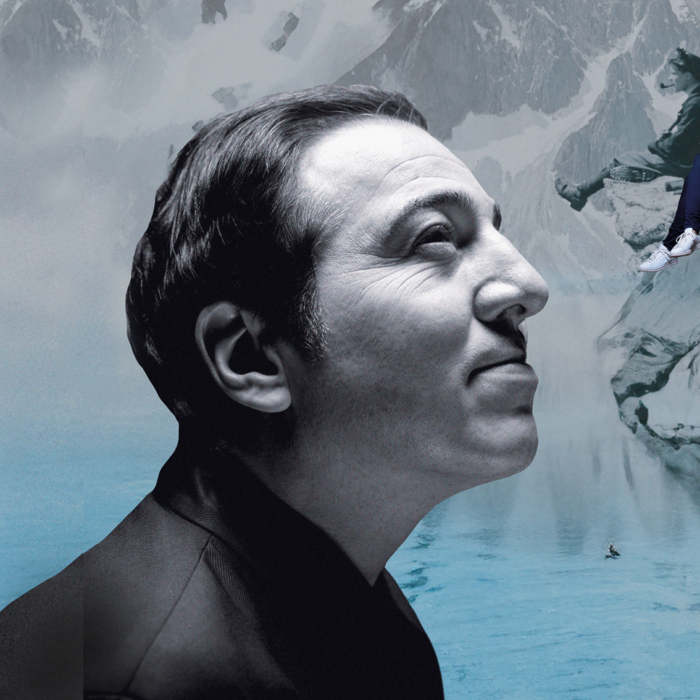
Fazıl Say, piano
Swiss Orchestra
Lena-Lisa Wüstendörfer, conductor
The pianist Fazıl Say performs two piano concertos by Mozart, accompanied by the Swiss Orchestra under the baton of Lena-Lisa Wüstendörfer. Their programme will be rounded off – true to the traditions of the Swiss Orchestra – with two little-known late-Romantic gems from Switzerland itself.
—JOSEPH LAUBER
Suite romande
WOLFGANG AMADEUS MOZART
Piano Concerto No. 12 in A major, K. 414
Piano Concerto No. 20 in D minor, K. 466
PAUL JUON
Serenade Music op. 40
Sometimes you just have to seize the day and grasp the chances life gives you. Like Wolfgang Amadeus Mozart back in 1781, when he gave up a safe position in Salzburg to go and strike out as a freelance composer and pianist in Vienna. He composed his Piano Concerto No. 12 in 1782, during this transitional period when he had already achieved initial success but was still far from being properly established. So he intended this concerto to occupy “the middle ground between being too difficult and too easy”. It was to be a work in which “connoisseurs alone will derive satisfaction, but in such a way that non-connoisseurs will also be satisfied, though they know not why”. To make his piece accessible to amateur musicians who played in private, Mozart structured his new concerto in such a way that it might also be accompanied by nothing more than a string quartet. What’s more, he hoped to get his works co-financed by patrons by offering a subscription to the tune of four ducats – not unlike today’s crowd-funding programmes. While this only brought him limited success, the first performance of his new concerto was nonetheless a hit. And the risks that Mozart took also found their reward: in 1785, he was able to finance his Piano Concerto No. 20 in D minor solely through the subscription concerts he had meanwhile established with himself as pianist – performing barely after the ink had dried on his manuscript paper. Mozart had become so good in his business that he was completing his works more or less to order. His gamble on Vienna had indeed paid off.
The Turkish pianist and composer Fazıl Say is also a man who doesn’t shy away from a challenge, whether by offering courageous criticism of social injustice in his homeland, or by mastering the technical impositions of the concert repertoire. In Andermatt, Say will perform both the aforementioned piano concertos. Unlike No. 12, which was aimed at gifted amateurs, No. 20 in particular makes demands that can only be truly fulfilled by real virtuosos. This programme is bookended by works by two near-forgotten Swiss composers: Joseph Lauber, who was born in Ruswil near Lucerne, grew up in the Jura, and in the late-19th and early 20th centuries created a significant oeuvre in which we repeatedly hear his impressions of the natural world of his Alpine homeland. Paul Juon came from a family of emigrant confectioners from the Canton of Graubünden. He was born in Moscow, and only in later life was able to fulfil his longing to return to his native Switzerland. All the same, nor did he forget the land of his birth, as is evident in the echoes of Eastern Europe in the “Quasi Polka” that features in the Andante of his Serenade Music. Lauber and Juon – if you’ve never yet heard of them, then it’s time for you to take a chance and rediscover them!
A subscription for ANDERMATT MUSIC gives you direct access to regular classical events in Switzerland’s highest-lying concert hall, and means you don’t have to miss any highlights.
ANDERMATT MUSIC stands for high-quality music events off the beaten track, and convinces through its innovative, versatile concert programming.
Do you have any questions about purchasing tickets, subscriptions, travel or staying at the Andermatt Concert Hall? Here you will find answers to frequently asked questions.